 Made in USA

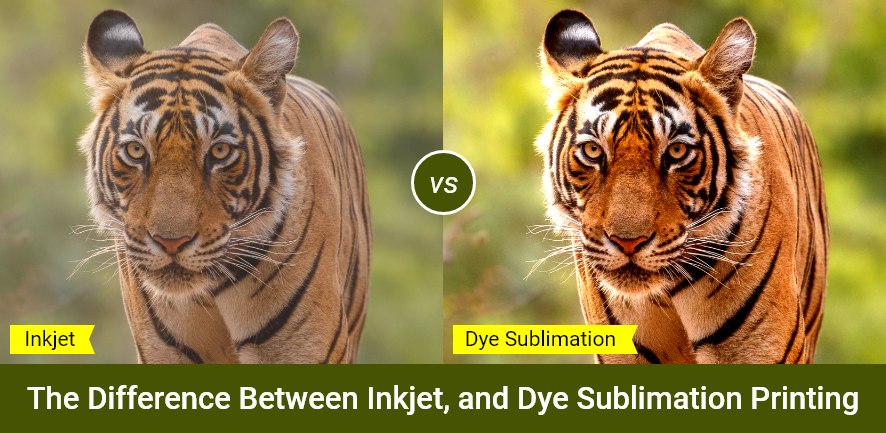
Dye Sublimation Ink vs Inkjet Printing
Understanding the difference between dye sublimation ink and traditional inkjet printing helps businesses choose the right solution for print quality, durability, and material compatibility. Although both technologies use liquid ink and inkjet printers, the printing process and final application differ significantly.
But what exactly is the difference between inkjet and dye-sublimation printing? To understand this, we need to go back to the basics.
Inkjet printer ink is based on the color spectrum known as CMYK, which stands for cyan, magenta, yellow, and black. The printer sprays color in fine dots, typically at 300 dots-per-inch (dpi) and average at 1440 dpi.
What happens during inkjet printing?
How Inkjet Printing Works
Inkjet printing applies ink directly onto the surface of materials such as vinyl, paper, or coated substrates. The ink adheres to the material surface and dries through airflow, heat, or ultraviolet curing systems depending on the printer technology.
As a result, inkjet printing supports a wide range of commercial graphics, signage, labels, and display applications.
What about dye-sublimation?
In the dye-sublimation printing process, the inkjet printer doesn’t require a high dpi print to create high-resolution graphics because the dye goes on treated paper (transfer paper) as a mirror image. When the image is printed, the dye quickly dries and is joined with a polymer-based fabric (typically polyester). From there, it moves to a heated pressure roller.
As the paper and material are fed carefully through the rollers, the following things happen in this order:
- The dye becomes gas while the heat makes the cells of the fabric or coating expand and open.
- The pressure from the rollers makes the gaseous dye enter the open pores to sublimate the dye into them. That’s why the printing process is called ‘dye-sublimation.’
Dye sublimation ink essentially integrates with the fabric, so even strong chemicals won’t make it come off the surface. Colors are diffused as gas, so instead of seeing a dot pattern on digital prints, you’ll notice a continuous tone print much like a photograph. That’s because the dots on transfer paper become gas and stop retaining the dot pattern. Then, the color transitions smoothly into the next tone. This is why dye sublimation printing is widely used for producing attractive prints on synthetic fabric banners, clothing, and displays.
Applications of the dye-sublimation printing process
Whether you’re using original or compatible ink cartridges for dye sublimation printing, make sure you have appropriate substrates. Polymer-based fabrics, wood, metal, and anything else that can go through the flatbed heat press are great materials. Avoid using natural fiber fabrics like bamboo, cotton, and linen. Remember that dye sublimation isn’t meant for direct-to-fabric printing.
Choosing the Right Printing Inks
Whether using inkjet or dye sublimation ink, businesses need high-quality printing supplies designed for dependable performance and consistent color output. Dye sublimation printing works especially well for polyester fabrics, promotional products, displays, and coated substrates requiring vibrant photographic image quality.
STS Inks offers professional dye sublimation ink solutions manufactured in the United States for wide-format printers from Epson, Mimaki, Mutoh, Roland, and Kyocera. Additionally, our printing solutions support reliable production workflows and long-term print durability.